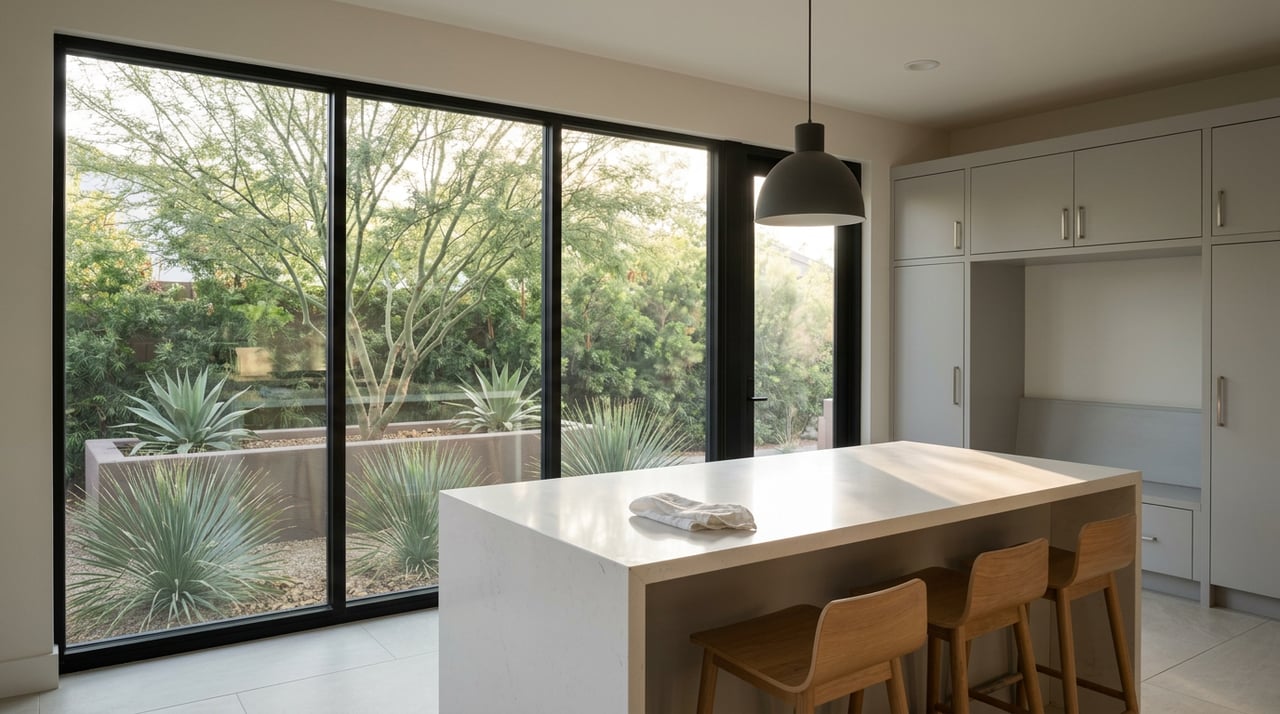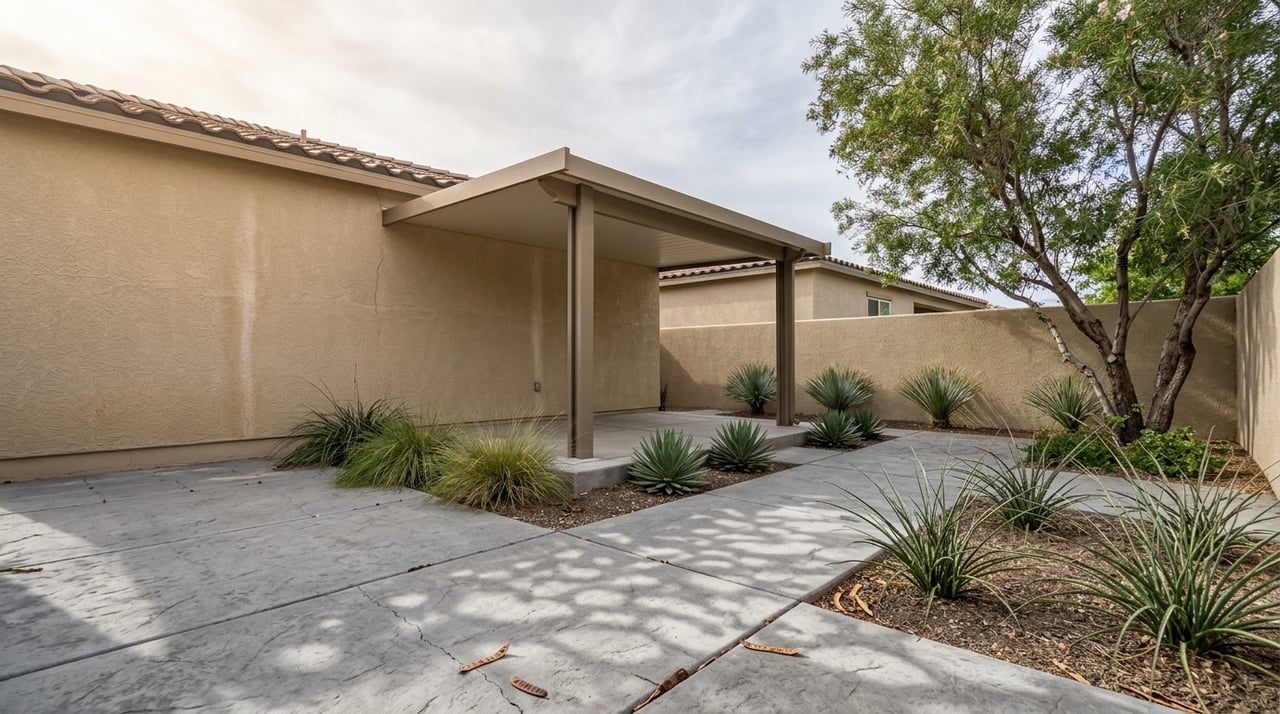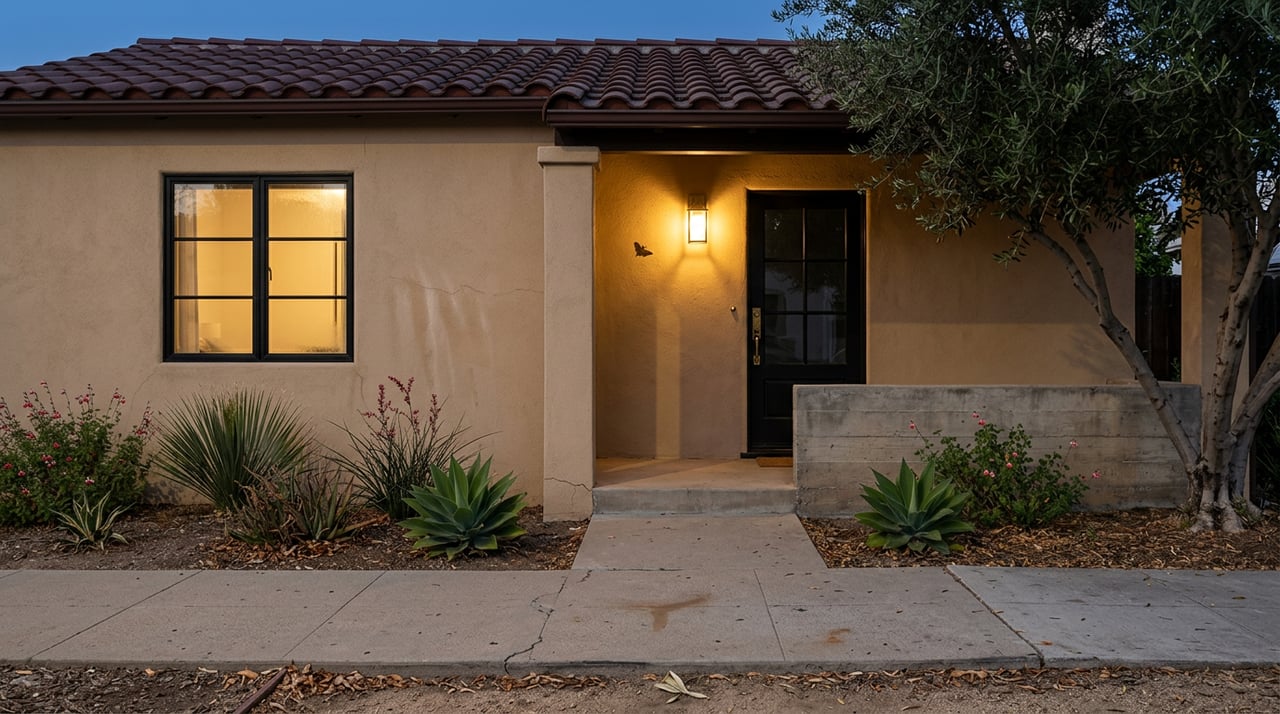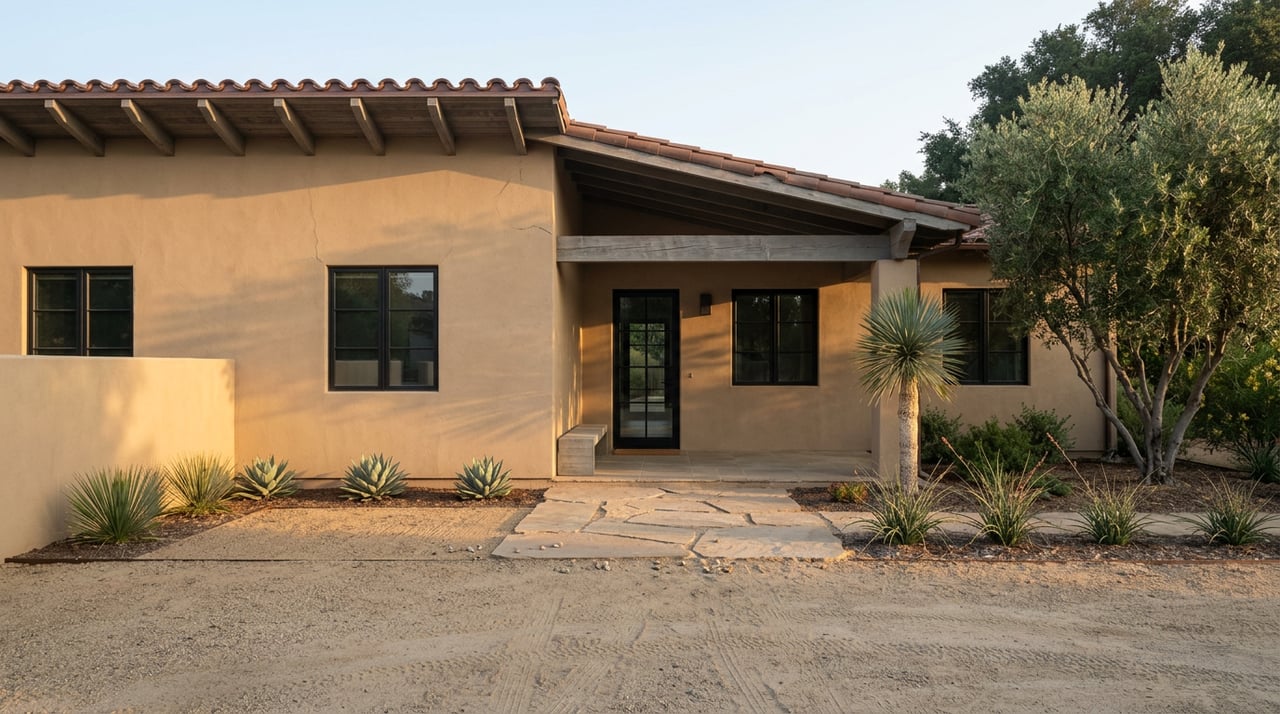
Picture two Acton listings that hit the market on the same week this spring, both around $850,000, both on a couple of usable acres, both with mountain views toward the Sierra Pelona range. One goes into escrow in three weeks. The other sits for four months, drops price once, and still needs a second appraisal before it closes. The houses look almost interchangeable in photos. The paperwork behind them is not.
That gap is the story in Acton right now, more than any single price point. Buyers who have already scanned the portals know the headline numbers. What they usually don't know is that in a small, well-and-septic market like this one, the thing that decides how a sale actually goes isn't the list price. It's whether the property can be appraised, financed, and inspected without a fight.
The number that looks stable until you check the date
As of May 2026, the median sale price across the 93510 ZIP code sat at $804,761, down about 7.5% year over year. That single figure would suggest a cooling market. But look at what the same ZIP code was reporting just a few months earlier and the picture gets messier. In January 2026, one national portal put the median around $730,000 while another tracked average home values closer to $834,000 for that same general window. Back in November 2025, a different tracker showed a median list price of $895,000 with homes sitting on the market a median of 156 days, more than triple what some other sources reported for roughly the same period.
None of these trackers are wrong exactly. They're just each looking at a small pond and calling it the ocean. Acton typically sees only a handful of closed sales in any given month, sometimes fewer than ten. When your sample size is that small, one high-end equestrian estate closing in the same window as three modest ranchettes can swing the median by tens of thousands of dollars and the days-on-market average by months. A buyer comparing that volatility to Valencia's much larger, steadier sales pool is comparing two different kinds of markets, not just two different price tags.
The practical takeaway: don't anchor an offer, or a listing price, to whatever number a national site shows this week. Pull actual closed comps for the specific pocket of Acton you're looking at, and expect the range to be wide.
Why the appraisal is the real gatekeeper
Here is where the two identical-looking listings actually diverge. Mortgage appraisers are generally trained to lean on three comparable sales within a reasonable radius and a recent timeframe, ideally within about six months and a mile of the subject property. That standard works fine in a tract subdivision. It falls apart on a custom ranch home with a barn, an arena, and 20 acres, because there may not be three truly comparable sales anywhere nearby.
When comps run out, appraisers either expand the search radius, which pulls in properties that aren't really similar, or they make heavy adjustments that both sides can argue about. Either way, the appraisal takes longer and carries more risk of coming in low. Lenders who specialize in rural properties describe this exact problem: properties with barns, workshops, or orchards are unique enough that comparable sales analysis becomes the hardest part of the file, not the borrower's credit.
That's the invisible fork in the road for the two listings above. The one that closed in three weeks probably sat on a smaller, more typical parcel with recent comparable sales nearby. The one that dragged for four months likely had unique acreage, an outbuilding, or a feature the appraiser couldn't easily match, and needed a second opinion to get the number lenders would accept.
The acreage ceiling nobody mentions until you're in contract
A second friction point shows up before the appraisal even happens: whether a lender will touch the property at all. Individual lenders set their own acreage caps, often somewhere between 5 and 20 acres, even when the loan program itself sets no such limit. A buyer who falls in love with a 15-acre parcel can get a pre-approval letter from one lender and a flat decline from another, for the identical property, simply because of an internal policy.
The workaround is usually a larger down payment, commonly 20 to 30 percent on larger acreage or non-standard parcels, or a lender who specifically underwrites rural properties. Veterans have a bit more room here. VA loans don't set an acreage limit at the program level, but individual VA lenders still apply their own caps, so shopping multiple lenders matters more in Acton than it would in a standard subdivision.
None of this shows up on a listing sheet. It shows up in week three of escrow, when a buyer's first-choice lender says no and the clock starts over with a second one.
What well and septic actually add to the timeline
Most Acton properties rely on private wells and septic systems rather than a public sewer connection, and a meaningful share are served by Los Angeles County Waterworks District No. 37, which covers parts of Acton but not the entire community. That distinction matters more than it sounds like it should, because it determines which of two nearly identical homes has a monthly water bill and which one has a well pump, a pressure tank, and periodic maintenance costs instead.
For homes on well water, lenders typically require a water quality test for potability and a flow test confirming adequate output, often in the range of 3 to 5 gallons per minute, plus a septic inspection to confirm the system is functional and not failing. Budget roughly $300 to $700 for the well test and $400 to $900 for the septic inspection, and build in extra escrow time for both. These aren't optional add-ons. They're standard requirements for most loan programs on properties without public utilities.
For the households that do sit within LA County Waterworks District No. 37, there's a separate wrinkle worth knowing before you budget a monthly payment. The county's Board of Supervisors adopted a five-year rate schedule that raises rates annually starting January 1, 2026, and the standard 5-HCF water allowance that used to be bundled into the monthly service charge goes away, meaning all water use gets billed under the quantity charge instead. It's a modest structural change, but it means a homeowner's actual water bill going forward won't match a Zestimate or last year's utility statement. If a home is within the district's service boundary, ask for a recent bill and read the Waterworks Districts Proposition 218 notice before you assume the recurring cost is fixed.
The zoning that keeps Acton looking like a frontier town
There's one more layer that shapes both what gets built in Acton and how it eventually resells, and it's easy to miss because it isn't about the house at all. Acton sits inside a county-designated Community Standards District created specifically to protect what the ordinance itself calls the community's rural, equestrian, and agricultural character. In practice, that means concrete sidewalks, curbs, and gutters generally aren't required on local streets, streetlights are restricted to cutoff "Mission Bell" design fixtures rather than standard suburban lighting, and any new commercial building has to lean into what the district calls its "Western Heritage" architectural theme, right down to guidance on hitching posts positioned to keep horses safe from traffic.
For a buyer coming from a master-planned neighborhood with sidewalks on every block, this can read as a lack of infrastructure. It's actually the opposite. It's a deliberate choice, made and maintained by a community with roots in gold, copper, and titanium ore mining that has held onto its Western character ever since, including active programs like the Acton Community Equestrian Center that boards and trains horses for residents who don't own their own. It also means renovation or new construction plans that assume standard suburban infrastructure will run into design review requirements a Valencia or Stevenson Ranch buyer would never encounter.
What this means if you're actually comparing neighborhoods
None of this makes Acton a harder place to buy. It makes it a different kind of transaction, one where the friction shows up in financing and inspection timelines rather than in the negotiation over price. A buyer who understands that going in can build the right contingency periods, line up a lender who already knows how to underwrite acreage, and budget for well and septic testing before it becomes a surprise in week three.
That's the gap between the three-week closing and the four-month one. It was never really about the price.
Frequently asked questions
Is every home in Acton on a well and septic system? No. Parts of the community fall within LA County Waterworks District No. 37's service area and receive public water, while other parcels rely entirely on private wells. Septic systems are common throughout the area regardless of water source, since there's no public sewer system serving most of Acton.
Will my Acton water bill be predictable if I'm on the county system? Not entirely. LA County Waterworks District No. 37 is in the middle of a board-approved five-year rate plan with increases each January through 2030, and the billing structure itself changed starting in 2026 when the previous water allowance was removed from the base service charge. Ask for a recent bill rather than relying on an estimate.
What does the Acton Community Standards District actually restrict? It's a county zoning overlay built to preserve Acton's rural and equestrian character. Among other things, it generally waives the requirement for curbs, sidewalks, and standard streetlights on local streets, requires cutoff-style lighting fixtures, and applies Western Heritage architectural guidelines to new commercial construction.
If you're weighing Acton against another pocket of the Santa Clarita Valley and want a read on what a specific parcel's water source, septic history, or zoning status actually means for your timeline, the team at Bri King works these details every day. Reach out for a straightforward conversation, or start with an Instant Home Valuation to see where your numbers actually stand.